
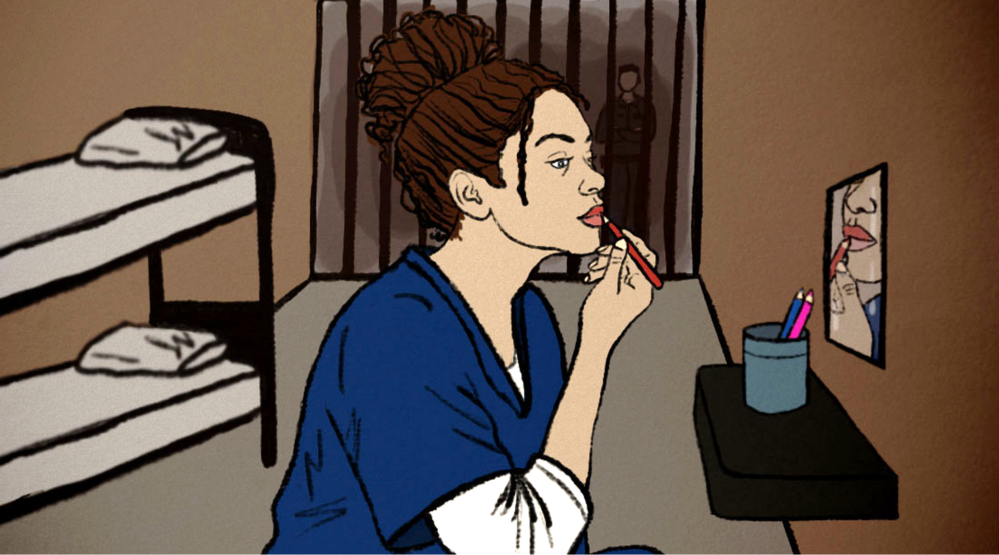
Although transgender people make up only about 1% of the U.S. population, politicians continue to view them as a threat to society and rolling back rights and protections and putting the trans population at risk. Lately, trans prisoners are in the crosshairs.
Last year the Department of Justice (DOJ) instructed inspectors to stop evaluating prisons and jails using standards designed to protect transgender and other gender-nonconforming people from sexual violence. A year later, the DOJ released statistics of sexual victimization in prisons which provide cherry picked data. The report buries data on the percentage of trans inmates who experienced sexual assault (which is historically high) but highlights data on trans inmates who were perpetrators of sexual assault.
In another attempt to target trans inmates and almost immediately after the Supreme Court blocked Trump’s bid to restrict gender care for trans prisoners, the Department of Health and Human Services published a final rule that states that gender dysphoria does not qualify as a disability under federal law. This rule relates to disabilities in the Rehabilitation Act of 1973 that prohibits programs and activities that receive federal funding from discriminating against individuals based on their disability. Targeting of trans people isn’t limited to federal and state prisons.
Trans immigrants detained by ICE allege experiencing abuse and transphobia at the hands of staff and other detainees. The women say they are being medically neglected and some have been forcibly de-transitioned. The U.S. is looking to send detainees back to their home countries which could be a death sentence for many. Often trans women seek asylum in the U.S. because they are targeted in their home countries. In the past they could be granted asylum because of how U.S. laws are written but it has become increasingly difficult under the Trump administration.


