
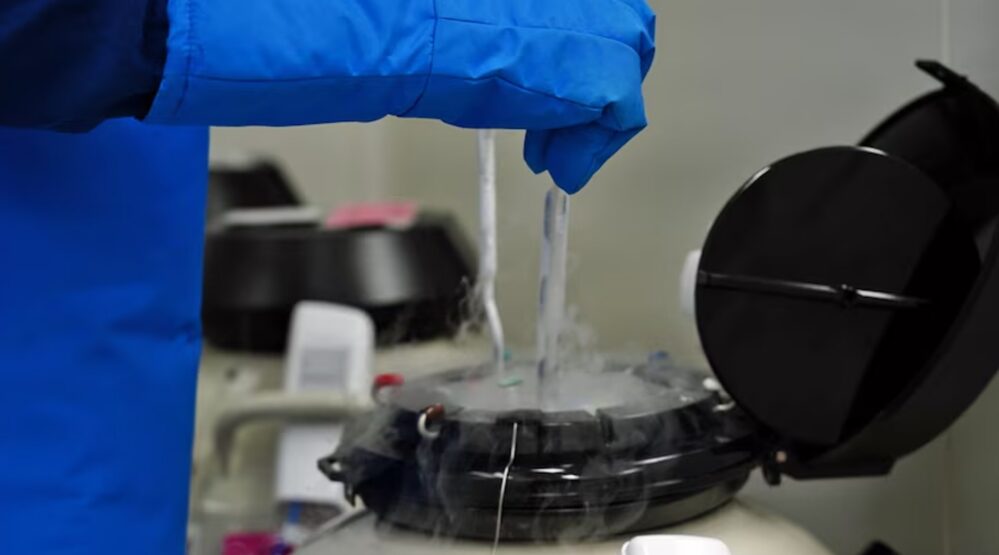
Rachel Smith is currently incarcerated in Queensland, Australia. She is serving a ten-year sentence for drug trafficking. Since she will be between 39 and 41 years old when she is released, she sought to freeze her eggs while in prison but was denied because Queensland law treats egg freezing as a form of assisted reproductive technology (ART) that prisoners cannot access. Although she was prepared to fund the procedure herself, each of her applications to the Queensland Corrective Services, the Brisbane Supreme Court, and the Court of Appeal failed.
This case raises some interesting and important questions regarding reproductive justice and carceral systems. Writing for The Conversation, academics Molly Johnston, Julian Koplin, and Neera Bhatia explore some of the legislative and ethical dynamics at play here. In particular, they identify Smith’s case as sex-based inequality. Since women’s fertility declines sharply with age, a long prison sentence can permanently reduce or eliminate their ability to have biological children, whereas most male prisoners remain capable of fathering children after release. Incarceration, they argue, is intended to restrict freedoms during a sentence, not to impose lasting reproductive harms that continue after release. Thus, denying egg freezing extends punishment beyond prison sentences, and may undermine women’s future reproductive agency.
The Australian state of Victoria formally recognizes IVF as a human-rights related health service, but egg freezing for prisoners remains a rare practice, and is mostly unspecified in justice systems around the globe.